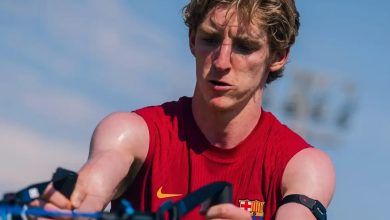
Sean Steur dropped the coldest, least media-trained response when asked about his performance yesterday and what to expect of him in the coming season

Sean Steur dropped the coldest, least media-trained response when asked about his performance yesterday and what to expect of him in the coming season.
In the polished world of Premier League media duties, where young players are coached to deliver safe soundbites about “taking it one game at a time” and “learning every day,” Sean Steur just refused to play the game. Fresh off coming off the bench in Newcastle United’s 2-1 pre-season win over Valencia at the Mestalla on Saturday, the 18-year-old Dutch midfielder was asked the standard double-header: how did he rate his own performance, and what should fans expect from him this season?
His answer landed like a perfectly weighted through-ball into space—no spin, no filler, pure ice.
“I did okay. Not special. Some good passes, some moments where I was late. It’s pre-season. I came on and tried to keep the ball moving. That’s it.”
When the follow-up came about the season ahead, Steur barely blinked. “Expect me to work. I want minutes. If I get them, I’ll try to use them properly. If not, I’ll keep training until I do. I’m not here to talk about what I might become. I’m here to play.”

That was the full exchange, delivered in calm, slightly accented English with zero theatrical pauses or forced smiles. No “excited for the challenge,” no “massively grateful for the opportunity,” no comparison to Frenkie de Jong or Kevin De Bruyne (even though he has previously named the latter as an influence). Just a teenager who signed from Ajax for around £23 million in July treating the microphone like an inconvenience rather than a stage.
The timing made it land harder. Newcastle, under new head coach Matthias Jaissle, had just completed a comeback victory sealed by Yoane Wissa’s brace after Anthony Elanga’s worrying early exit. Steur entered at half-time alongside other substitutes as the Magpies took control against ten men. He was not the headline act—Wissa and Bazoumana Touré took those plaudits—but he did what he has done since arriving: looked comfortable receiving under pressure, progressed the ball, and stayed disciplined.
For a player still adapting to the physical jump from the Eredivisie, that quiet competence is exactly why Newcastle paid the fee. Steur’s previous pre-season outings, including a full 90 minutes against Gateshead where he was one of the few consistent performers, had already shown the technical baseline: two-footed, tidy in tight spaces, capable of operating as a six or an eight. Yesterday simply continued the process without fanfare.
What made the post-match comments feel so refreshing—and so cold—was the complete absence of media training. Most 18-year-olds in his position would have leaned into the narrative of the big-money signing determined to prove himself after leaving the Ajax academy. Steur has never done that. Even in earlier interviews he has been notably grounded: uninterested in nightclubs, focused on the pitch, quick to downplay hype. The Valencia mixed-zone response was simply the purest version yet.
It also quietly addressed the reality of his situation. Newcastle’s midfield remains competitive. With established names and other young options, Steur is not guaranteed a starting role when the Premier League season begins. His reply made clear he understands the hierarchy without resentment. “I want minutes” is not a demand; it is a statement of intent stripped of entitlement.
For Newcastle supporters still adjusting to a squad rebuild following high-profile departures, this kind of clarity is valuable. Steur is not promising instant stardom or claiming he will redefine the midfield overnight. He is promising work and presence. In an era of carefully curated player brands, that restraint itself becomes the statement.
The coming months will test whether the cold exterior matches the output. Pre-season friendlies are limited evidence, and the Premier League’s intensity will demand more physicality and recovery than he has previously faced. Yet the early signs—technical assurance, tactical intelligence, and now this unfiltered honesty—suggest a player who knows exactly who he is at this stage of his career.
Sean Steur did not try to sell a dream yesterday. He simply described the work. In doing so, the least media-trained answer of the summer may have been the most revealing. Newcastle fans now know precisely what to expect: a young midfielder who will keep showing up, keep demanding the ball, and keep refusing to dress it up in empty words. Sometimes the coldest response is also the most useful.