Luis Enrique Explains Simple Tactical Plan Behind Paris Saint-Germain’s 8-2 Demolition of Chelsea
PSG boss reveals how a calm, flexible approach exposed Chelsea’s pressing system in brutal Champions League defeat.

Luis Enrique did not need complicated tactics or dramatic changes to dismantle Chelsea. In fact, his explanation after the game revealed something far more striking simplicity was the key behind Paris Saint-Germain’s dominant 8-2 aggregate victory.
On a painful night at Stamford Bridge, Chelsea were beaten 3-0, completing a heavy Champions League exit that will be remembered for all the wrong reasons. Not only did the Blues concede eight goals across two legs, but they also set an unwanted record by letting in two goals within the first 14 minutes — the earliest they have ever done so in a Champions League match.
But beyond the numbers and the scoreline, the real story lies in how easily PSG seemed to control the game.
Speaking after the match, Enrique broke down his team’s approach in a way that almost made it sound effortless.


“For us, today, the key was keeping different moments when playing that game,” he explained. “If they press us, we keep the ball, then attack the space in the counter.”
It is a simple idea, but one that was executed perfectly.
From the opening minutes, PSG looked comfortable. When Chelsea tried to press high up the pitch, the French side calmly played through the pressure, drawing players out of position before quickly exploiting the spaces left behind. When Chelsea dropped deeper, PSG showed patience, keeping possession and controlling the tempo until gaps appeared.
“We did that well in the first minutes,” Enrique added. “If they don’t press at a high level, we keep the ball in control of the match.”

This ability to switch between styles — from patient build-up to quick, direct attacks — is what made PSG so difficult to handle. It also exposed a key weakness in Chelsea’s approach under Liam Rosenior.
Rosenior has often spoken about his desire to play an aggressive, pressing style of football. The idea is to win the ball high up the pitch and create quick chances. But against a team as composed and technically strong as PSG, that approach became a risk.
Each time Chelsea pressed, they left space behind. And each time they left space, PSG took advantage.
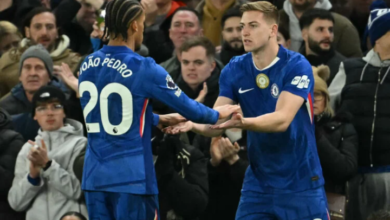
The opening goal was a clear example. A mistake from Mamadou Sarr under pressure allowed PSG to break quickly, leading to an early strike that set the tone for the night. From that moment, confidence drained from Chelsea’s play, while PSG grew stronger.
It also highlighted another issue — predictability.
Enrique’s comments suggest PSG knew exactly what to expect. They anticipated Chelsea’s pressing, prepared for it, and turned it into a weapon against them. At the highest level, being predictable can be dangerous, and Chelsea paid the price.
There is a deeper lesson here for Rosenior.
Top teams are not just defined by how they play, but by their ability to adapt within games. Enrique’s PSG showed that clearly. They were comfortable defending deep, building slowly, or attacking quickly depending on the situation. That flexibility allowed them to stay in control, no matter what Chelsea tried.
In contrast, Chelsea appeared stuck in one approach. When it worked, it created moments of energy and pressure. But when it failed, there was no clear alternative. The defensive line looked exposed, the midfield struggled to recover, and the team’s shape became disorganised.
This idea of control is something Enrique emphasised.
Football is not just about attacking or defending — it is about managing moments. Knowing when to press, when to hold, when to take risks, and when to stay patient. PSG showed a clear understanding of this balance, while Chelsea struggled to find it.
The result was a game that felt one-sided, even when Chelsea had spells of possession.
For Rosenior, the challenge now is how to respond.
There is no doubt that his philosophy has potential. An aggressive, attacking style can be effective, especially against teams that struggle under pressure. But at the Champions League level, where opponents are more composed and tactically aware, it must be combined with discipline and adaptability.
Learning from Enrique’s approach could be crucial.
The concept of “suffering and control” — being able to absorb pressure without losing shape, and then respond at the right moment — is something Chelsea currently lack. Their defensive line, as seen in both legs, often collapses under pressure, leaving too much space for opponents to exploit.
There is also the mental side of the game.
After conceding early, Chelsea struggled to recover. Heads dropped, mistakes increased, and the team lost its structure. In contrast, PSG remained calm and focused, sticking to their plan and trusting their system.
That difference in mindset is often what separates good teams from great ones.
For Chelsea fans, the defeat is a tough one to take. Not just because of the result, but because of how it happened. Being outplayed is one thing — being outthought is another.
For Rosenior, it is a moment of reflection.
Enrique’s words may have been simple, but they carry a powerful message. Football at the highest level is not always about complex tactics or constant changes. Sometimes, it is about doing the basics better than your opponent — controlling the game, adapting to situations, and making the right decisions at the right time.
PSG did all of that.
Chelsea did not.
And that is why, over two legs, the gap between the two sides felt so large.