FIFA Instructed to Kick Argentina Out of World Cup After Falkland Islands Stunt Against England
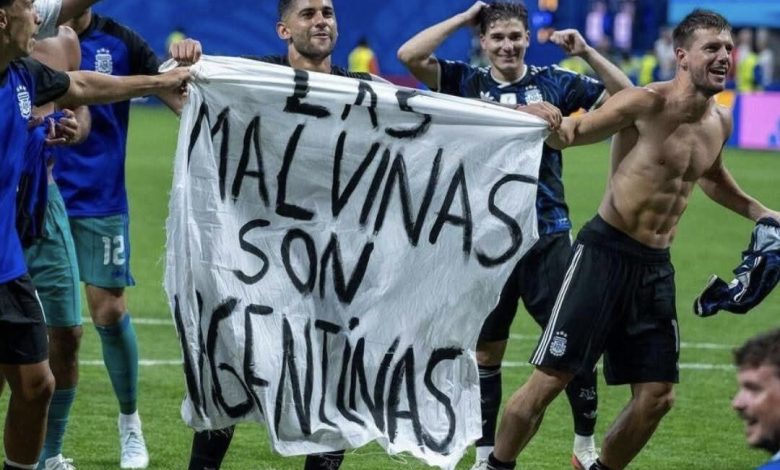
In a dramatic escalation of footballing and political tensions, calls have intensified for FIFA to expel Argentina from the 2026 World Cup following a provocative post-match celebration during their semi-final victory over England. The defending champions secured a thrilling 2-1 comeback win in Atlanta, but the triumph was overshadowed by players displaying a banner reading “Las Malvinas son Argentinas” (“The Falkland Islands are Argentine”).
The banner, held aloft by stars including Cristian Romero and Giovani Lo Celso, directly referenced the long-standing sovereignty dispute over the Falkland Islands (known as Islas Malvinas in Argentina). The gesture immediately drew condemnation from British officials. UK Prime Minister Keir Starmer’s spokesperson stated, “The World Cup might not be ours, but the Falkland Islands definitely are,” emphasizing self-determination for the islanders.
Business Secretary Peter Kyle described the act as “entirely inappropriate,” urging FIFA to launch a thorough investigation. FIFA’s disciplinary code prohibits political messages at stadiums, including banners of a “political, ideological, religious or offensive nature.” Precedents exist, such as a 2014 fine against Argentina for a similar banner.
The incident revives painful memories of the 1982 Falklands War, which claimed over 900 lives. Online petitions demanding Argentina’s removal have surged past millions of signatures, amplifying public outrage in England.


Argentina’s camp defended the celebration as a spontaneous expression of national pride. Vice President Victoria Villarruel posted images online, noting the banner reflects what Argentines “carry in our blood.” Coach Lionel Scaloni and players have stressed focusing on football ahead of the final against Spain.
FIFA has initiated review procedures but indicated any sanctions would likely come post-tournament, allowing Argentina to contest the final. Expulsion remains highly unlikely given the tournament’s advanced stage and FIFA’s history of measured responses. However, potential fines or suspensions for involved players could follow.
The episode underscores how deeply historical grievances intersect with modern sport. While football aims to unite, the Falklands banner has reignited diplomatic friction between Argentina and the UK, testing FIFA’s commitment to keeping politics off the pitch. As the world awaits the final, this controversy ensures the 2026 tournament will be remembered as much for off-field drama as on-field brilliance.