
 Minister
Controversy and Clarity: Inside the VAR Decision on Brennan Johnson’s Disallowed Goal Against Hull City
The Premier League’s Match Centre and the Football Association (FA) found themselves under intense scrutiny once again following a dramatic, VAR-influenced incident in Everton’s high-stakes 2–2 clash against Hull City at the MKM Stadium. In the 35th minute of a fiery first half, Everton forward Brennan Johnson thought he had given his side a vital lead. However, after referee Michael Salisbury was called to the pitchside monitor by VAR Tim Wood, the goal was ruled out, sparking instant debate across the league.
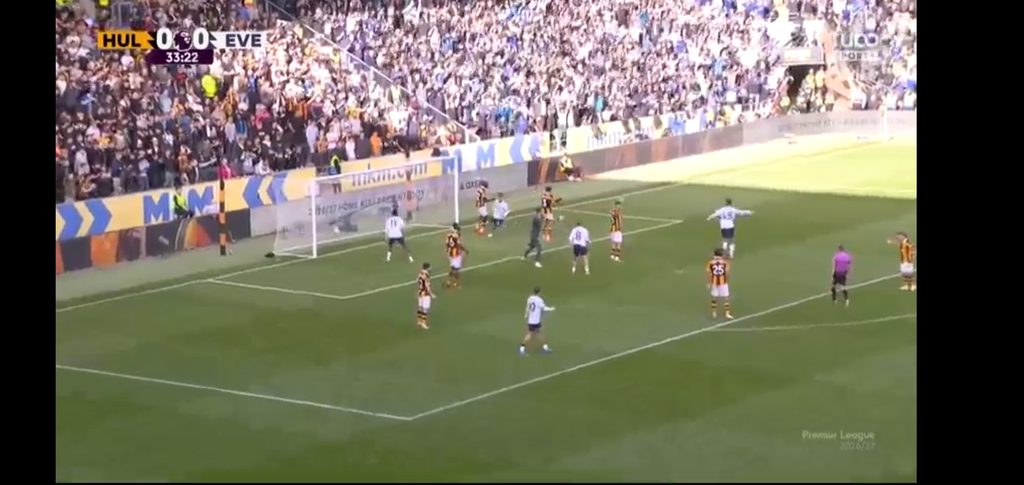
The Premier League Match Centre promptly clarified the decision and the mechanics behind the call, detailing how subjective offside interpretations operate under current PGMOL guidelines.
The Incident: How the Goal Was Overturned
The decisive moment unfolded when Everton’s Harrison Armstrong unleashed a long-range shot toward Hull City’s goal. Brennan Johnson, standing in an offside position, attempted to get onto the end of the strike while physically engaging Hull defender Ryan Giles. The ball ended up in the net, and assistant referees initially allowed the goal to stand on the field.
However, VAR official Tim Wood reviewed the footage and determined that Johnson’s action constituted interference. Under the laws of the game, factual offsides (such as a player being ahead of the last defender when touching the ball) are decided directly by VAR, but interference calls involve a degree of subjectivity. Consequently, Wood advised referee Michael Salisbury to conduct an On-Field Review (OFR).
After watching the replay on the pitchside monitor, Salisbury confirmed the intervention, relaying his decision over the stadium public address system:
”Everton No. 22 is in an offside position and challenges Hull No. 3. Final decision is offside.”

Official Statements and Expert Analysis
Shortly after the call, the Premier League Match Centre issued an official statement confirming the logic behind the overturn. They reiterated that because Johnson was in an offside position when Armstrong struck the ball and subsequently challenged Giles, he was deemed to be actively interfering with an opponent under Law 11.
Former Premier League assistant referee Darren Cann provided expert commentary on BBC Radio 5 Live, praising both the speed and accuracy of the VAR team:
Correct Process: “An excellent and correct intervention from VAR Tim Wood, who was also right to instruct referee Michael Salisbury to go to the monitor as this was a subjective offside decision, rather than a factual one.”

Legal Definition: “Brennan Johnson was in an offside position when the shot came in from Harrison Armstrong. Johnson then challenged Hull City’s Ryan Giles and therefore in law was interfering with an opponent.”
Match Impact & Context
The disallowed goal proved to be a turning point in an entertaining 2–2 draw. Hull City capitalized on the shift in momentum early in the second half when Joe Gelhardt opened the scoring in the 48th minute. Kiernan Dewsbury-Hall responded for Everton seven minutes later, before Thierno Barry and Mohamed Belloumi added further goals to leave the sides split with a point each.
While Everton fans expressed frustration at the fine margins involved, officiating experts and match authorities reaffirmed that the correct protocol was executed swiftly and transparently.

 Thewolf
 xy
xy
 Badboy
 Empiresam